

Americans are expected to spend $4.4 billion on Halloween costumes this year, according to the National Retail Federation’s annual survey, with about $2 billion of that going to adult costumes. I’ll admit that a good chunk of my October budget goes to the face, not the outfit. Last year I did a glow-in-the-dark skeleton with a $6 kit from a pop-up store, and my eyelids itched for two days. That’s when I started reading the fine print on Halloween makeup safety, and I came away convinced that the riskiest thing most of us put on for Halloween is the cheapest: the no-name face paint and the colored contacts. Here’s what I check now.
Halloween is the one night we put mystery products near our eyes
Half of consumers plan to dress up this year, the NRF found, and costume shopping now starts online, with 32% of people pointing to online searches as their top source of inspiration. That means a lot of us are buying makeup from listings and seasonal shops we’d never trust for everyday foundation. And then we put it on the most sensitive parts of our faces, sometimes for six hours straight, sometimes on kids.
The FDA regulates face paint and novelty makeup as cosmetics, which means the same color additive rules apply to a Halloween kit as to your regular lipstick. The difference is that cheap seasonal products, especially imports, are where you’re most likely to find colors that aren’t allowed.
Check the color names before you buy
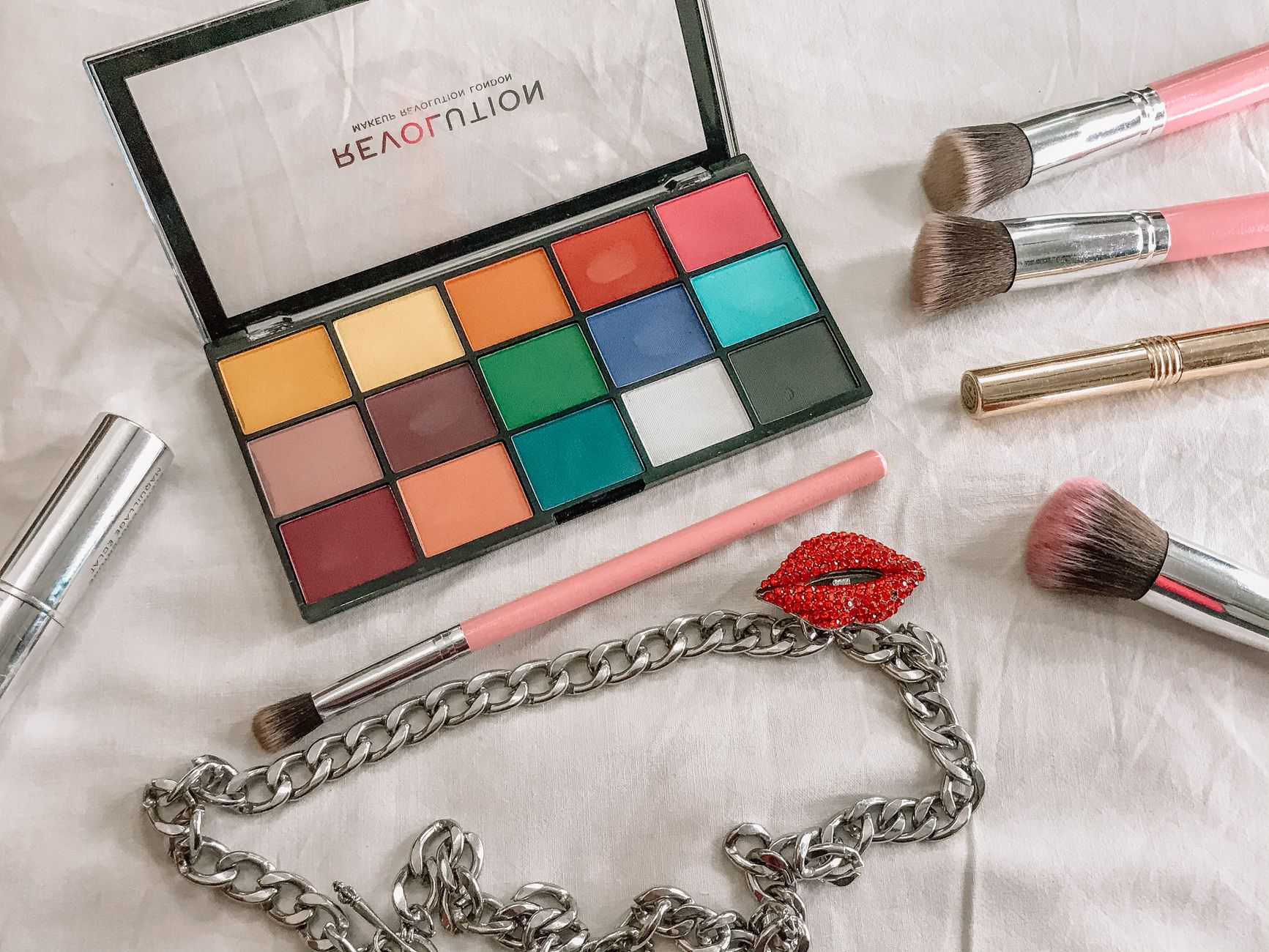
This is the step most Halloween makeup articles skip, and it’s the one I’d put first. The FDA’s guidance on novelty makeup says every color in a cosmetic must be approved for that use, and you can check the ingredient list against the agency’s Summary of Color Additives. If a color isn’t on the list, don’t use it.
Two categories matter most at Halloween. The FDA has approved eight fluorescent, or “neon,” colors for cosmetics, including D&C Orange No. 5, D&C Red No. 21, and D&C Yellow No. 7, but none of them are approved for use near the eyes. For glow-in-the-dark products, luminescent zinc sulfide is the only approved color, and the FDA limits it as well: it’s not for everyday use, and it’s not approved for the eye area either. My glowing skeleton eyelids were, in hindsight, exactly what the label said not to do.
If the package has no ingredient list at all, that’s your answer. Put it back.
Patch test this weekend, not on Halloween night
The FDA suggests putting a small amount on your arm a couple of days before you use it on your face, especially if you have allergies. With Halloween on Saturday, this weekend is the time. Dab a little on the inside of your forearm Sunday, check it Monday and Tuesday, and only then plan your look around it. If it smells bad or strange when you open it, the agency says to throw it away, since that can mean contamination.
Take it off the same night. Use whatever remover the label recommends, be gentle around your eyes, and don’t sleep in it. Heavy cream makeup can irritate skin and flake into your eyes overnight. I use an oil cleanser first, then a regular face wash, and I keep a clean washcloth by the sink so I’m not tempted to put it off.
Colored contacts need a prescription, even the costume ones
If the face paint is the riskiest item for your skin, decorative contact lenses are the riskiest for your eyes. The FDA treats all contact lenses, including colored and decorative ones with zero vision correction, as medical devices that require a prescription and a proper fitting by an eye doctor. Lenses sold without one, at costume shops or beauty supply stores or through random online listings, are illegal to sell that way.
The American Academy of Ophthalmology points to a 2015 study from Japan that tested five pairs of non-prescription colored lenses. Researchers found chlorine on three types of lenses, including one pair that still released chlorine after rinsing, and iron on four pairs. The AAO warns that uneven colored coatings can scratch the eye and raise the risk of infections that can threaten your vision. If you love the look, book an eye exam and get prescription colored lenses. Otherwise, do the drama with liner and shadow.
The cost math on doing it properly
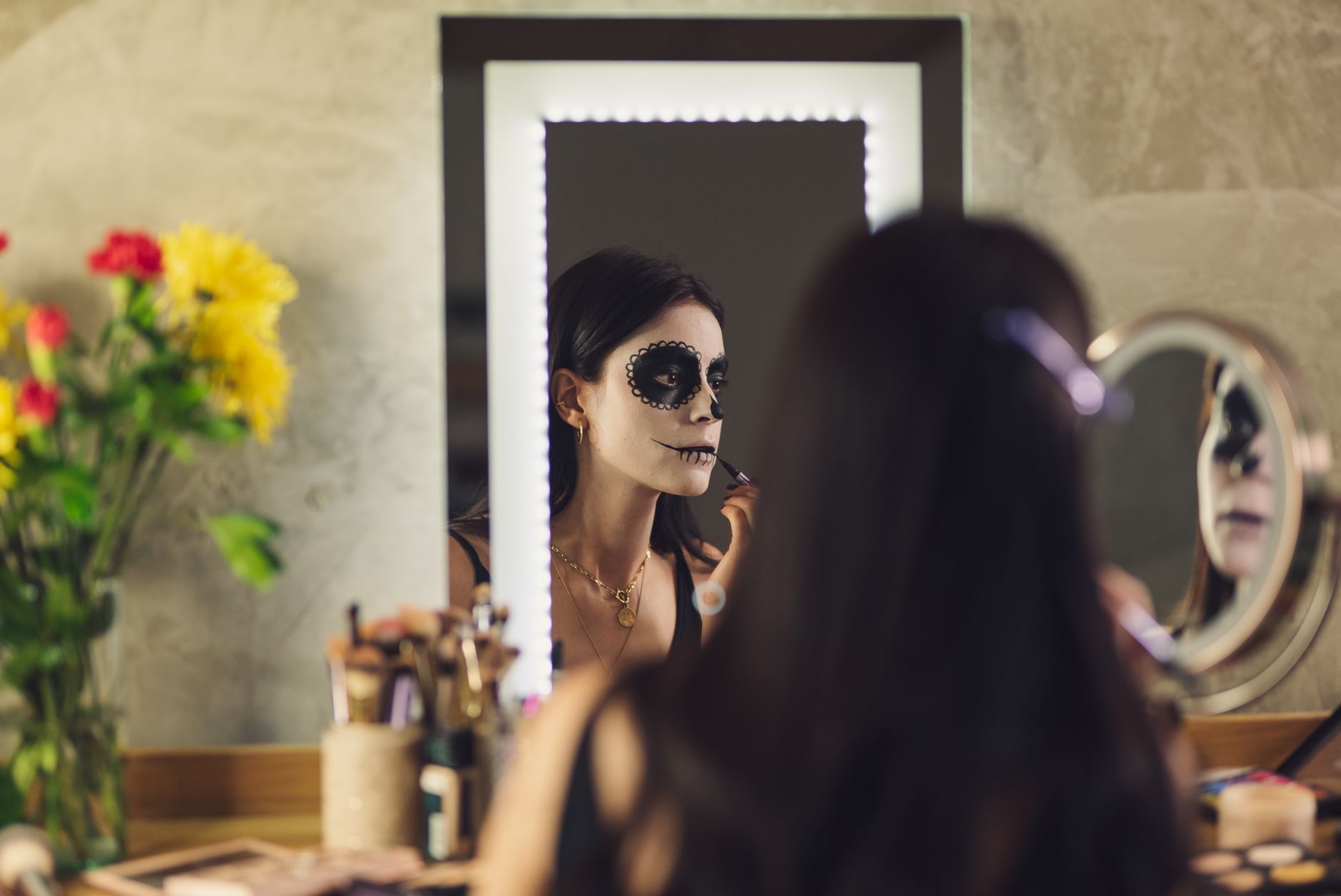
Doing this the safe way costs more upfront, but the per-face math changes once you count every use. A professional water-activated palette like the Mehron Paradise Makeup AQ 8-color basic palette runs $39.99, and the cakes last for many uses. Say you paint three faces each Halloween (yours and two kids, or you and two friends) and use it for four years. That’s 12 faces, and $39.99 divided by 12 is about $3.33 a face.
Now compare that with buying a fresh $9.99 seasonal kit for each person every year, which is what I used to do because the old ones dried out or cracked. Three kits a year for four years is 12 kits, or $119.88. The palette saves you about $80 over four years, and you know exactly what’s in it. Even if you only use it for two Halloweens, it’s $6.67 a face, still cheaper than a new kit per person.
Before you buy anything, check your own makeup bag. A black eyeliner, a dark lipstick, and a white cream or concealer will get you surprisingly far, and you already know they agree with your skin. For a cat or a sharp villain wing, the techniques from my winged eyeliner guide do most of the work with products you trust.
My Halloween makeup safety rules for this year
Read the ingredient list and skip anything that lists no colors or colors you can’t find on FDA’s list. Keep neon and glow-in-the-dark products away from your eyes, no matter how good they look in the photo. Patch test this weekend. Take everything off before bed. And leave the costume contacts on the store shelf unless an eye doctor wrote you a prescription for them. If you do have a reaction, the FDA suggests seeing a doctor and reporting it through the agency’s cosmetic complaint process, which helps catch a bad batch before it reaches someone else’s kid next year.