
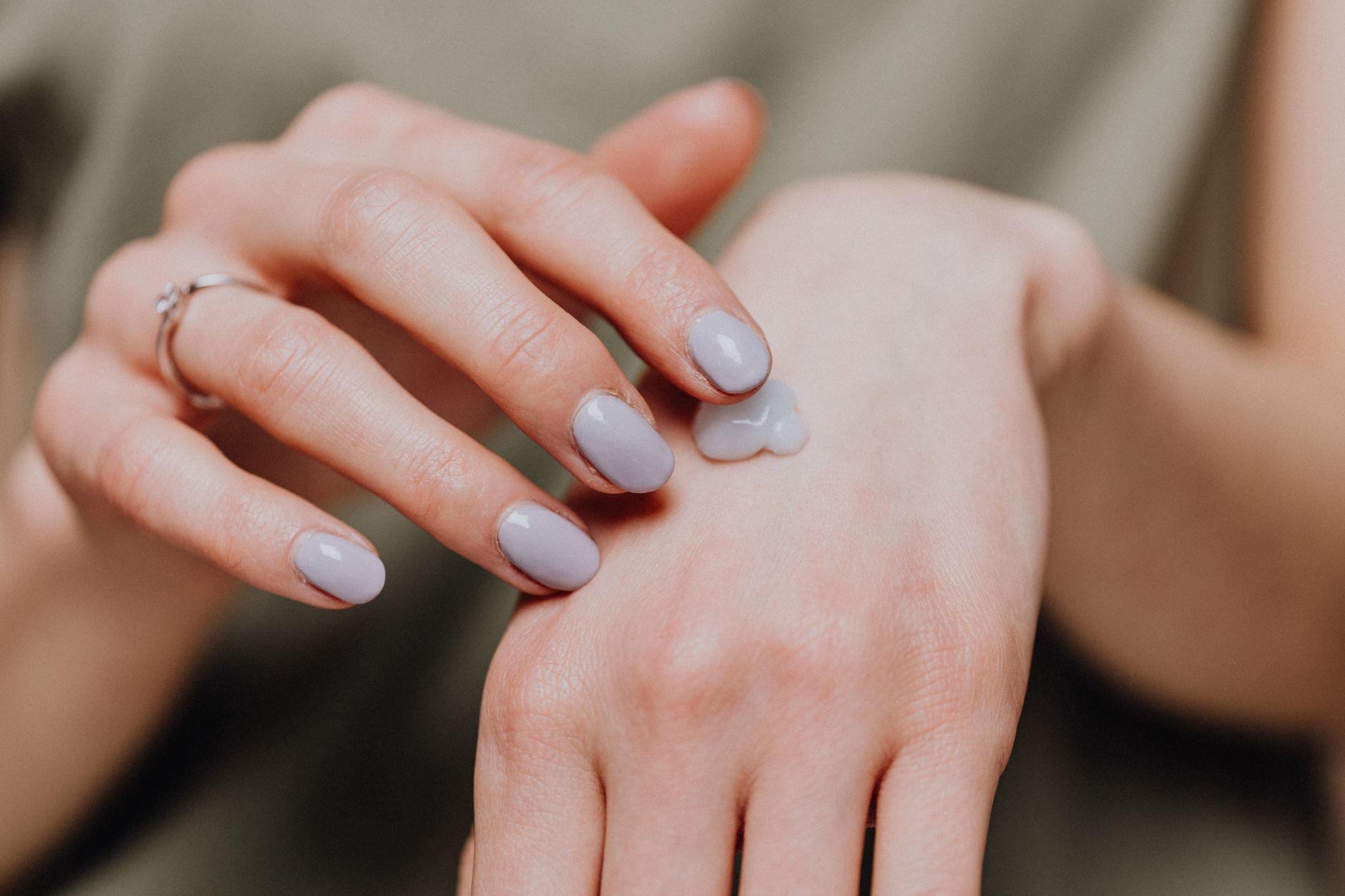
Last January I spent $64 on three new moisturizers in two weeks, and my cheeks still felt tight by lunch. What finally fixed my winter dry skin was a $10 hygrometer (mine is a ThermoPro TP50), the little digital thermometer that also reads humidity. The first night I set it on my nightstand it read 22%. My bedroom air was about as dry as a desert afternoon, and no cream was going to win that fight on its own.
So here’s my argument for the last week of January, when the radiators have been running for three months and everyone’s hands are cracking: winter dry skin is mostly about the air in your house, and fixing the room beats upgrading the jar. Moisturizer still matters. It just can’t do the whole job when the air is pulling water out of you all night.
Winter dry skin starts with physics, not your skincare
Cold air can’t hold much water. That’s the part most winter skincare advice skips. When freezing outdoor air leaks into your house and the furnace warms it up, the amount of water in it stays the same while its capacity to hold water roughly quadruples. Relative humidity, the number that matters to your skin, collapses.
You can do this math yourself. Air at 32°F holds a maximum of about 6.1 hectopascals of water vapor, a measure of how much moisture is in it. Say the outdoor air is at 80% relative humidity, so it carries about 4.9. Heat that air to 70°F, where the maximum is about 24.9, and the same 4.9 now works out to roughly 20% relative humidity. Nothing dried out the air. The furnace just made the room much better at pulling water from everything in it, including your face.
Your skin barrier is measurably weaker in January
This isn’t only a comfort thing. In a 2003 study published in Acta Dermato-Venereologica, dermatologists Harald Löffler and Rudolf Happle tested how 487 volunteers’ skin reacted to a standard mild irritant over two years. The skin’s reaction, measured as extra water loss through the skin, was about three times higher in January than in August. Low absolute humidity was the strongest predictor: people tested on the driest days had more than four times the odds of landing in the most reactive group.
That matches what I see in my own mirror. In winter, the same retinol I use happily in September starts to sting, and the same cleanser leaves me tight. My skin isn’t changing products. It’s handling everything with a weaker barrier. If you’re using strong actives (I went through the main anti-aging ingredients in my guide to retinol, vitamin C, and the rest), January is the month to use them a night or two less each week.
The target is 30% to 50% indoor humidity, and more is worse
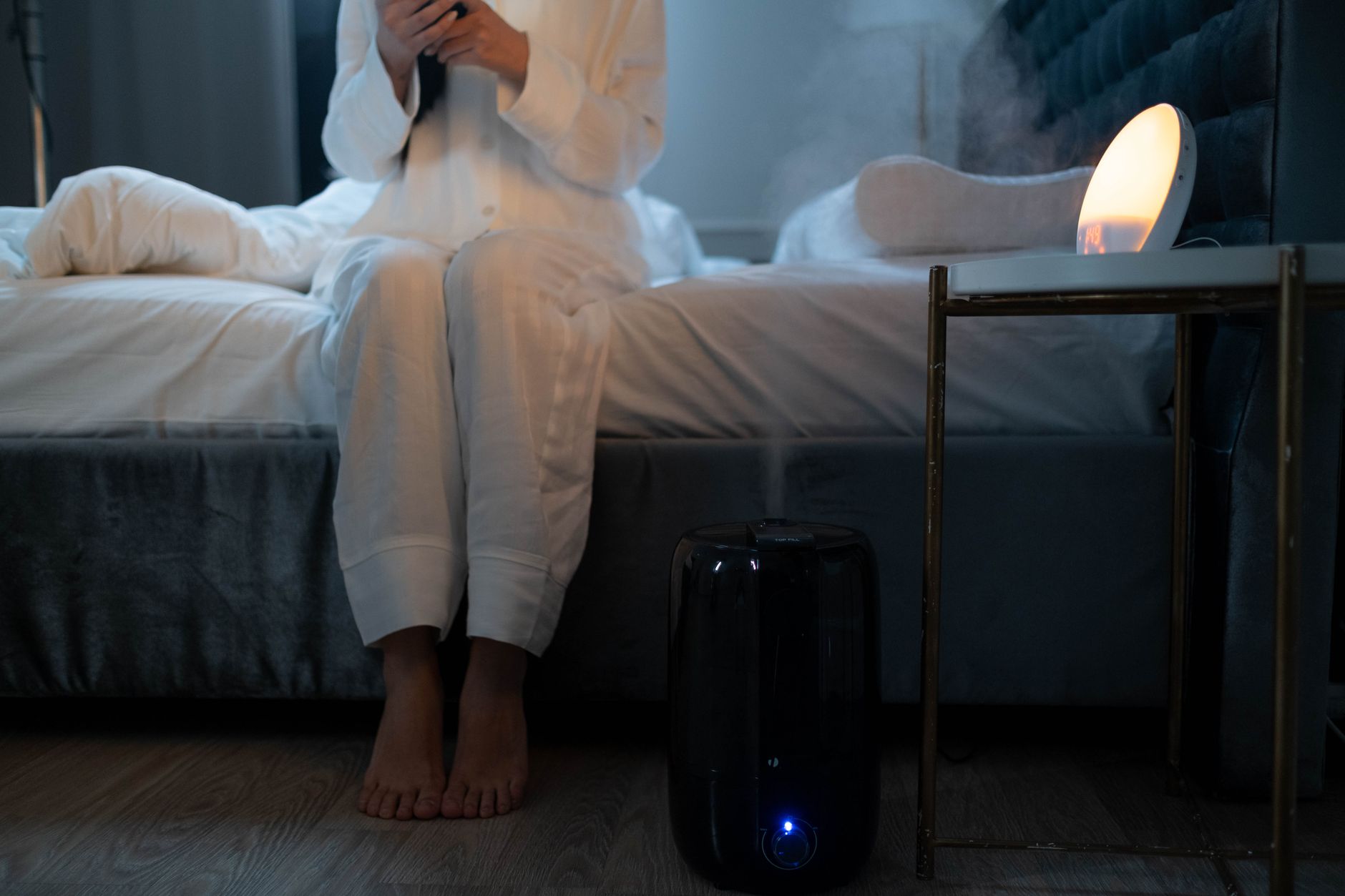
Both the Mayo Clinic and the EPA land on the same range. Mayo Clinic’s humidifier guidance says to keep indoor humidity between 30% and 50%. The EPA’s guide to mold and moisture says to keep it below 60%, and ideally in that same 30% to 50% band, because damp air feeds mold and dust mites.
This is the point the top winter skincare lists leave out. They tell you to “use a humidifier” as if more is always better. It isn’t. A humidifier running full blast in a closed bedroom can push the room past 60% and fog your windows, and now you’ve traded a skin problem for a mold problem. Without a hygrometer you’re guessing in both directions. With one, you set the humidifier, check the number in the morning, and adjust.
A humidifier for dry skin costs more to run than to buy
My second mistake was the machine itself. I bought a cheap ultrasonic humidifier and filled it from the tap. Within a week, a fine white dust coated my dresser. Ultrasonic models put the minerals from tap water into the air, which is why Mayo Clinic recommends distilled or demineralized water, and why it says to clean the tank every three days.
Distilled water costs about $1.50 a gallon at my grocery store, and my humidifier goes through roughly a gallon a night. Over a 120 night heating season, that’s 120 gallons at $1.50, or $180, which is three times what I paid for the machine. An evaporative humidifier, the kind with a wick filter, doesn’t throw minerals into the air, so tap water is fine. If its filter runs about $15 and you replace it twice a season, the running cost is $30. Add the $10 hygrometer and either setup beats another $64 of moisturizers, but the evaporative one is the cheaper habit by $150 a winter.
If you already own an ultrasonic machine, keep it. Just budget for the water, or run it only in the bedroom at night, which is where you spend eight straight hours.
Then let a simple cream do its job
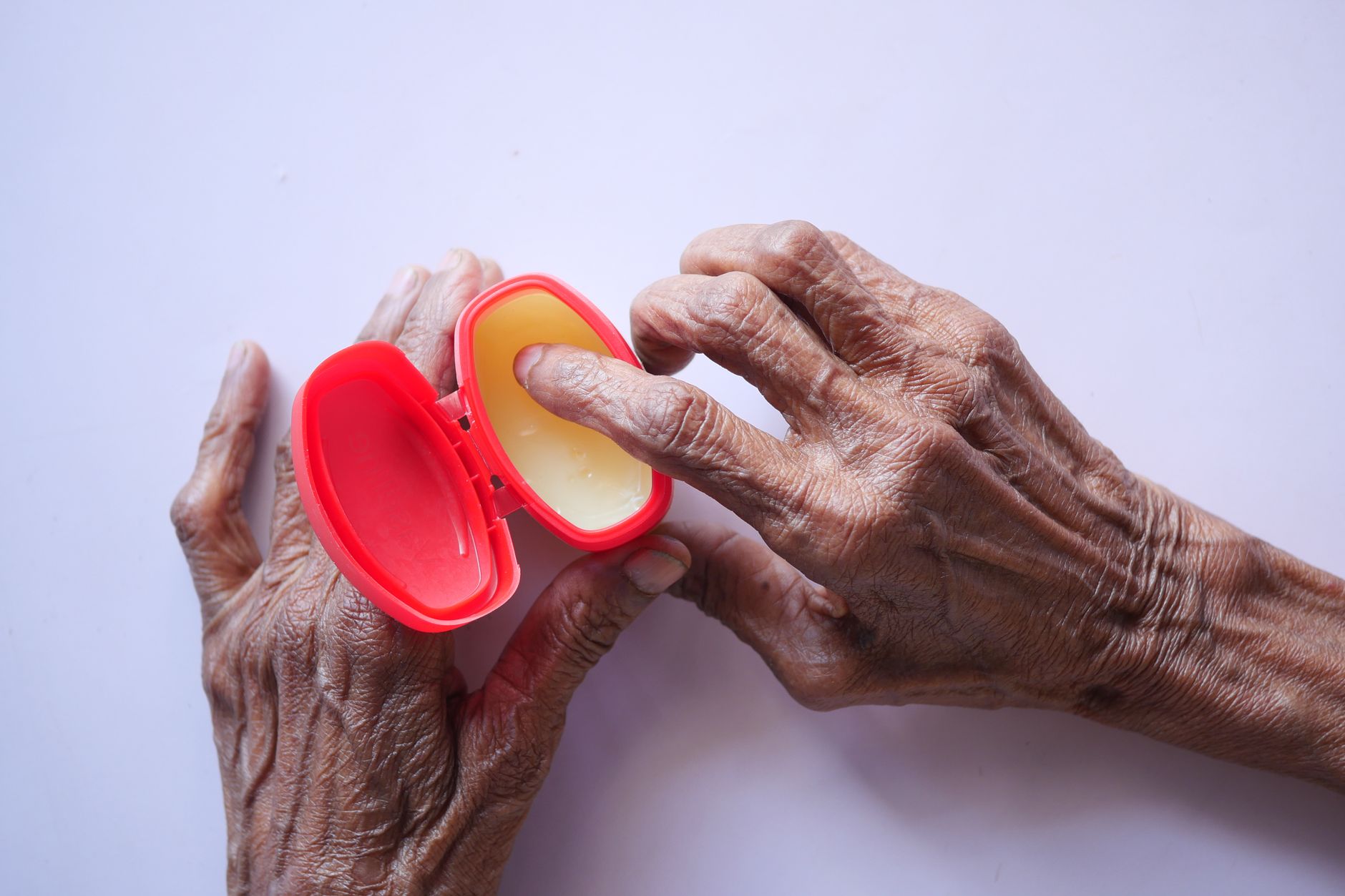
Once the air is in range, your skincare has a fighting chance, and it doesn’t need to be fancy. A thick, fragrance free cream with ceramides or petrolatum, applied within a few minutes of getting out of a lukewarm shower, seals in the water that’s already on your skin. The classic 16 ounce tub of CeraVe Moisturizing Cream that lives in half the bathrooms I know costs under $20, and it does this as well as anything I’ve paid four times more for. Put it on your hands every time you wash them, too, since hand washing strips oil faster than anything else you do in a winter day.
The order matters, though. Room first, then routine. If you want the full morning and night version, my complete skincare routine guide lays out the steps by skin type.
Measure your room before February
February is usually just as dry as January, so there’s still a full month of heating season to fix. Put a hygrometer where you sleep tonight and read it in the morning. If it’s under 30%, add humidity, starting with the bedroom. If it’s over 50%, turn things down. And if your skin is cracked, bleeding, or itchy enough to keep you up at night even with the room in range, see a dermatologist, because that can be eczema or another condition that needs real treatment.
My winter dry skin got better the week my bedroom went from 22% to 40%. I didn’t buy a single new product that month, and that’s still the cheapest skincare win I’ve ever had.