

The Canon PowerShot G7 X Mark III was listed at $1,606.97 earlier this month. That’s a compact camera that launched years ago, and it’s selling for more than a lot of new laptops because a few million people on social media decided they wanted their photos to look like 2008 again. I get it. I bought into the digicam trend last fall. I just did it with a $45 Canon from a thrift store, and I’ve taken more photos with it than I took with my phone over the holidays.
Here’s my position before spring trips and summer weddings arrive: the look everyone is chasing comes from a tiny sensor and a harsh little flash, not from a particular brand or price. If you want in, the cheapest option is often the most authentic one, as long as you check three boring things before you pay.
The digicam trend is now showing up in sales numbers
The digicam trend stopped being a TikTok aesthetic and turned into an industry story this month. When the camera industry group CIPA released its 2025 shipment data, TechRadar reported that compact camera shipments rose 29.6% to 2.44 million units, while their value grew 49.8%. Meanwhile DSLR shipments fell 30.8% to about 691,000, an all-time low. For years, compacts were the category everyone assumed the smartphone had killed.
That value number is the one to notice. Shipments rising by about 30% while value rises by about 50% means people are paying more per camera. Brands have noticed. The Fujifilm X100VI was listed at $2,075 in the same roundup, and it’s had waitlists. The cheapest end of the market is moving too: TechRadar noted that the Kodak PixPro FZ55, a camera under $200, tops global sales lists. It’s a simple 16 megapixel point and shoot with a 5x zoom and a built in flash, which is to say it’s a 2010 camera you can buy new.
The look comes from small sensors and direct flash

Why does a 15 year old camera make photos that feel so different from your phone’s? Your phone uses a small sensor too, but it hides that with heavy processing. It merges several frames, brightens shadows, smooths skin, and flattens the light so everything looks evenly lit and a little perfect.
An old point and shoot doesn’t do any of that. It takes one frame, fires a small flash straight at your subject, and gives you exactly what the sensor saw: bright faces, dark backgrounds, a bit of grain, colors that lean warm or cool depending on the model. That direct flash is most of the “party in 2007” feeling. Some older cameras also use CCD sensors, which a lot of fans swear render color differently, though that’s more taste than science.
So a $1,600 premium compact will give you beautiful photos, but they won’t necessarily look like the ones you’re saving on your phone. Those usually come from cheap cameras.
A thrift store camera beats a new one on cost per photo
Here’s the math I did on my own setup. The camera itself, a Canon PowerShot Elph from around 2009, was $45 on a shelf at my local thrift store with no battery. A third party replacement battery and charger were $12 online, and an 8GB SD card was $8. Total: $65.
Over the past few months I’ve taken about 2,000 photos with it. Divide $65 by 2,000 and each photo costs a little over three cents. Put the G7 X Mark III through the same math and $1,606.97 divided by 2,000 is about 80 cents a photo. Even a new Kodak PixPro at just under $200 works out to roughly 10 cents a photo in that first year. The thrift store camera also has one more advantage nobody mentions: if it gets lost at a wedding or dropped at the beach, I’m out $65, not a month’s rent.
Mental Floss noted back in 2024 that the Canon Elph, Sony RX100, and Fujifilm X100 lines were especially sought after, which is why those names are priced up on resale sites. Look for less famous models from the same era, like older Nikon Coolpix or Panasonic Lumix compacts, and you’ll get the same kind of photos for less.
Check three things before you buy any old digital camera
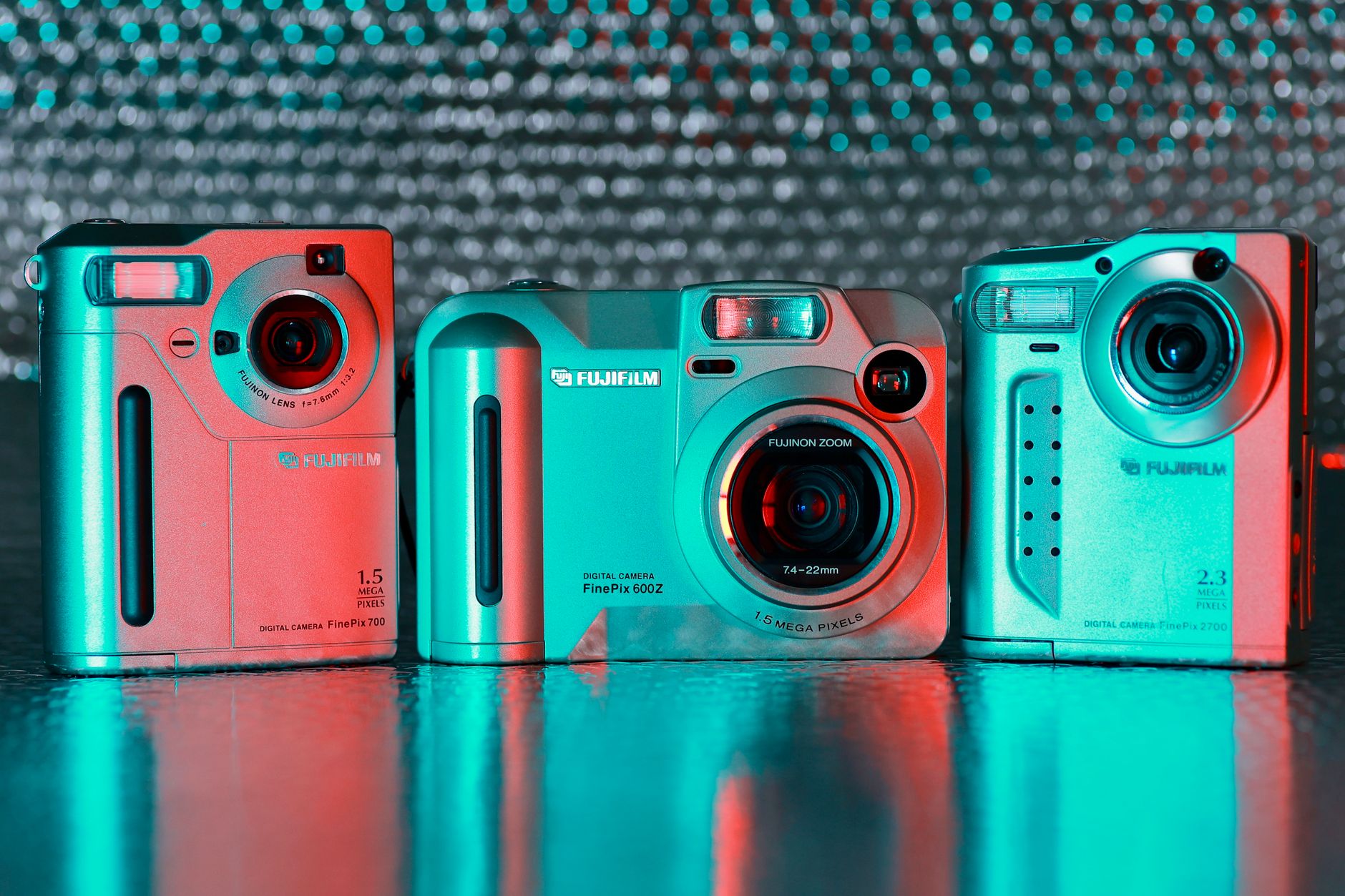
Most “buy a digicam” advice skips this part, which is exactly where I got burned. First, the battery. Many older cameras use proprietary batteries, and some are no longer made. Search for the model number plus “battery” before you buy, and make sure a replacement and a charger exist, because a camera without power is a paperweight.
Second, the memory card. Cameras from the mid 2000s sometimes use formats that are hard to find today, like Olympus and Fujifilm’s xD cards or Sony’s Memory Stick. Cameras that take standard SD cards are far easier to live with. Some very old models also can’t read cards above 2GB, so check the manual online.
Third, the lens. Turn the camera on if you can and look for scratches, haze, or a lens that sticks when it extends. A lens error message is one of the most common failures in these cameras, and it’s usually not worth fixing.
Use your digicam where your phone feels like too much
The best part of carrying a separate camera turned out to be the thing I didn’t expect. When I take a photo with it, I’m not checking messages afterward. At dinners and parties, the camera comes out, the flash goes off, everyone laughs at how bad they look on the tiny screen, and then it goes back in my bag. Friends ask me to email the photos later, which feels like 2008 in the nicest way.
If you’re planning a trip this spring, a small camera is also a nice way to shoot places without disappearing into your phone. I rounded up some spots that were made for photos in my older post on Instagrammable places around the world, and they work just as well with a camera that fits in your pocket.
The digicam trend will probably cool off eventually, the way every trend does, and resale prices will come back down. Until then, skip the $1,600 version. Go to a thrift store, check the battery, the card, and the lens, and spend the difference on the trip you’re going to photograph.
[…] if you’d like something a little more nostalgic than a crisp phone photo, the old digital camera trend makes a fun card too. A slightly flashy, grainy shot of the whole family on the couch is very […]