
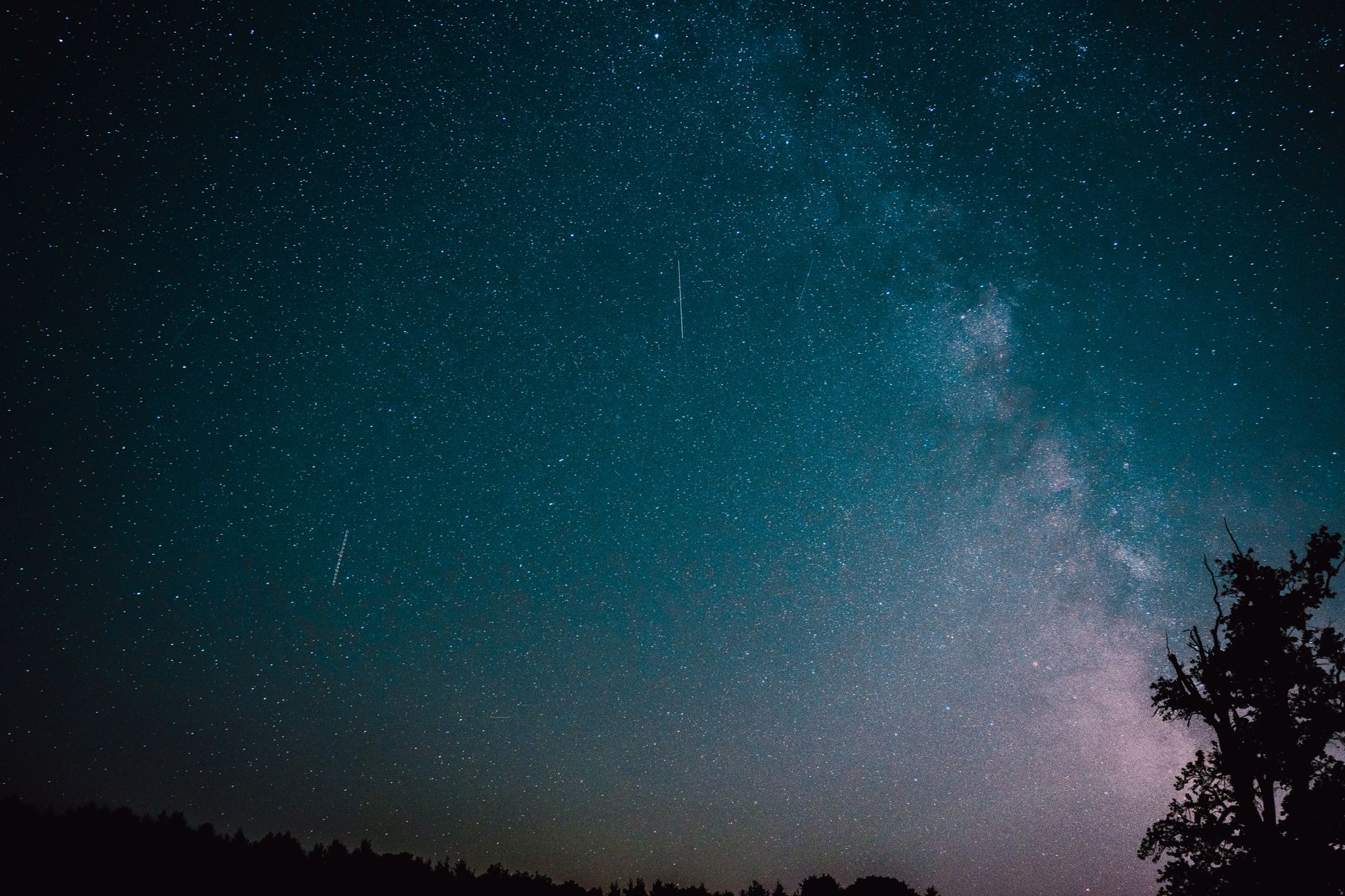
Next week is the best Perseid meteor shower setup in years. The shower peaks the night of August 12 into the morning of the 13th, and the moon is new right at the peak, so there’s no bright moonlight washing out the faint streaks. Space.com puts the rate at up to 100 meteors an hour under dark, clear skies. I’ve tried to photograph the Perseids with my phone twice before and came home with a camera roll full of black rectangles. The third time, I changed one thing: I stopped trying to catch a meteor and started taking a hundred pictures of the same patch of sky. That’s the whole trick, and it’s why I think you can do this without a real camera.
You won’t catch a meteor by reacting to it
Most guides start with settings. I want to start with timing, because this is the part that ruined my first two attempts. A meteor crosses the sky in about a second. By the time you see one, say “oh!”, and tap the shutter, it’s gone. Every photo I took that way was of empty sky.
The people who get those beautiful shots aren’t faster than you. They set up a camera pointed at one area and let it take long exposures back to back for an hour or more, then go through the frames afterward. A phone can do a version of that now, which wasn’t true when I started.
How to photograph the Perseids with your phone’s long exposure mode
On a recent iPhone, Night mode turns on automatically in the dark, and when the phone senses it’s on a tripod, it can stretch the capture to as long as 30 seconds. You’ll see the timer number by the yellow moon icon at the top of the screen. Tap it and drag the slider all the way to the maximum.
Pixels go further. Google’s research team explained when it launched astrophotography in Night Sight that the phone splits a long capture into a series of frames of up to 16 seconds each, for a total of up to 4 minutes, and then aligns and merges them. It kicks in when the phone is braced and still. Samsung’s Expert RAW and Pro modes let you set the shutter manually too, if you like fiddling.
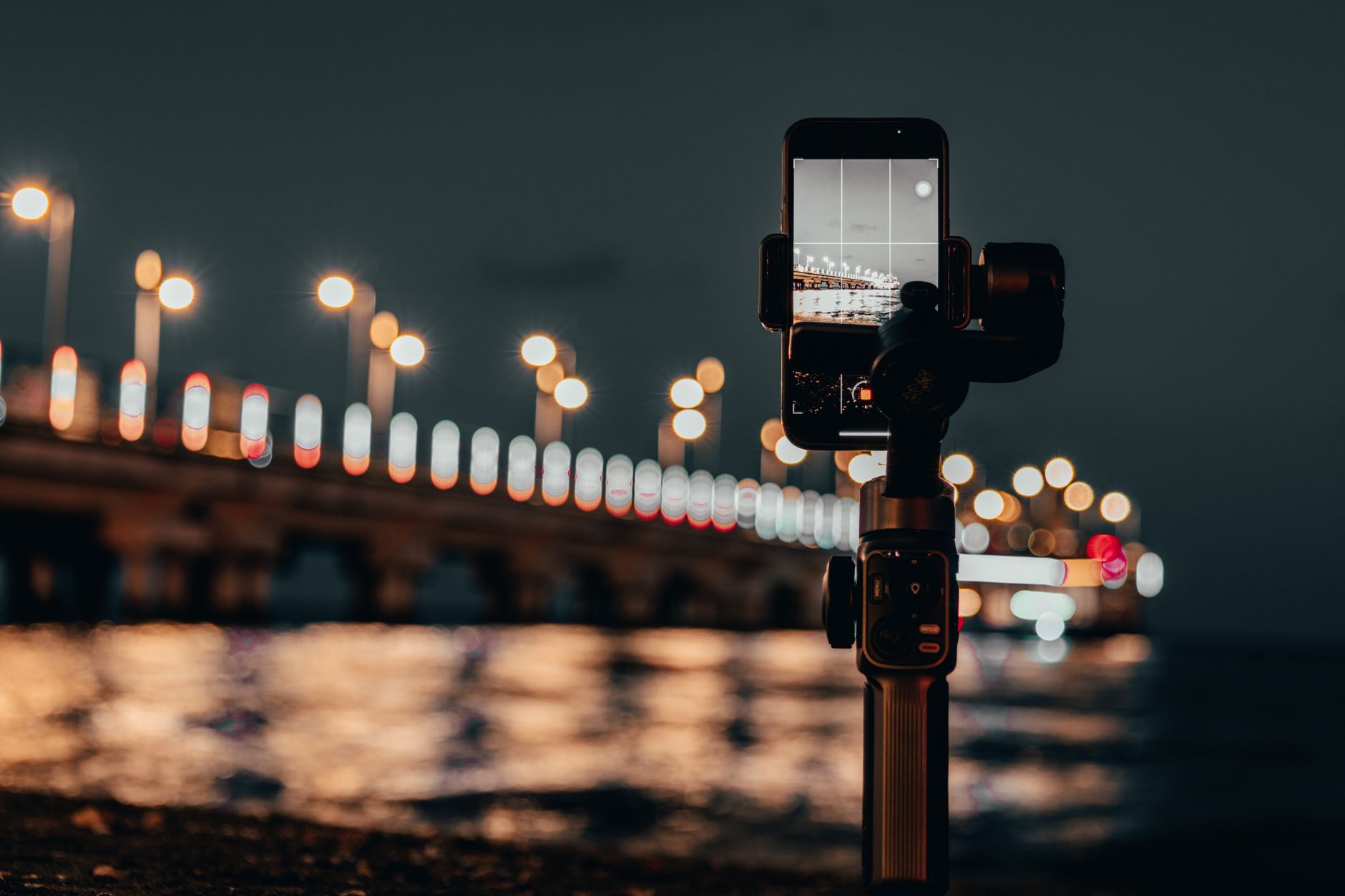
Whichever phone you have, the mode only works if the phone doesn’t move. A $20 phone tripod with a Bluetooth remote is the best money you’ll spend on this. In a pinch, prop the phone against a water bottle on the hood of a car and use the self-timer so your tap doesn’t shake it.
Dark sky matters more than any setting
Here’s the part the top results mostly skip. A 2016 study in Science Advances by Fabio Falchi and colleagues found that about 80% of North Americans live where light pollution hides the Milky Way. Your phone’s long exposure will happily brighten that orange city glow until it swallows every faint meteor. The same meteor that shows up as a crisp white line from a dark field turns into nothing over a lit-up parking lot.
You don’t need to drive to a national park. Getting 30 to 45 minutes outside a city, away from streetlights, makes a real difference. A state park, a friend’s farm, or a dark beach all work. Turn off your car’s headlights well before you park, and give your own eyes 20 minutes to adjust so you can enjoy the show while the phone works.
The odds math: why 100 frames gets you a keeper
Let me show you why the patient approach works. That 100-per-hour figure is the ideal, with the radiant overhead and perfect darkness. From a reasonably dark spot in the real world, seeing 40 an hour is a good night. Those meteors land all over the sky, and your phone’s main lens only covers a slice of it. If your frame takes in roughly a tenth of what you can see, that’s about 4 meteors an hour crossing your shot.
Now the frames. With 30-second Night mode exposures and a couple of seconds between them, you get about one picture every 32 seconds. An hour is 3,600 seconds, so that’s roughly 112 frames. If 4 meteors cross the frame and your phone records the brighter half, you end up with about 2 frames that have a visible streak. Run it for two hours and you’re looking at around 4. That’s not a lot, and it’s still far better than the zero I got by tapping at every flash. Some phones also have an interval or time-lapse feature that does the repeated shooting for you, which saves your thumb.
Where to point and when to start
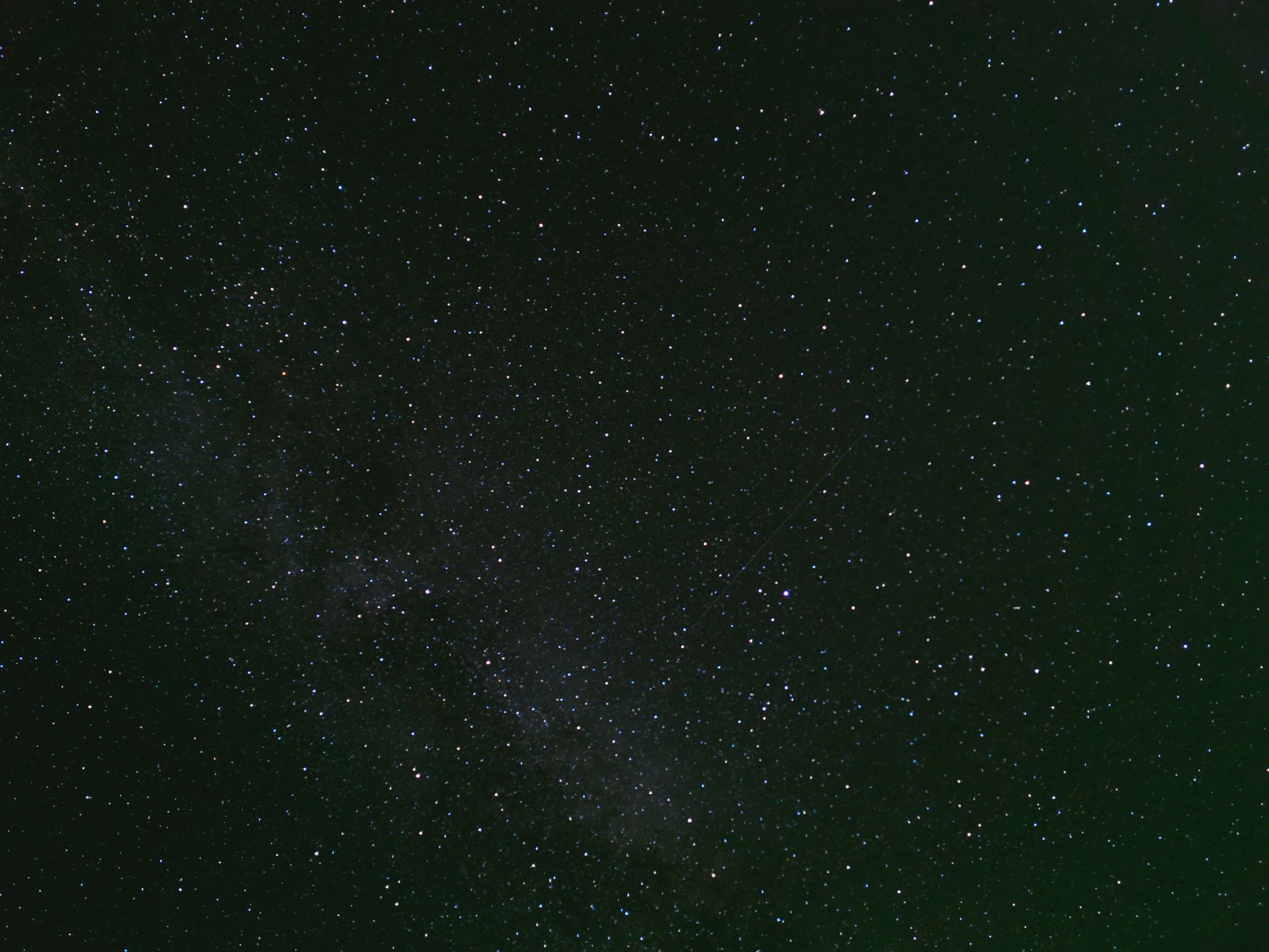
Space.com recommends starting around 11 p.m. and watching until dawn, with the pre-dawn hours best because the radiant in Perseus climbs higher. I’d aim the phone about 45 degrees up and roughly 45 degrees away from Perseus (in the northeast sky), since meteors near the radiant look short while ones farther out leave longer trails. Put a little scenery at the bottom of the frame, like a tree line or the roof of a barn. A meteor over a silhouette looks like a photograph. A meteor in black sky looks like a scratch.
Turn off the flash, tap to focus on a bright star (or the farthest light you can find), and lock focus and exposure by holding your finger on that spot. Then don’t touch it.
Edit the keepers like a photographer, not a filter
When you get home, scroll through fast. The meteor frames jump out as thin lines. Open your best one and pull the exposure down a little, drop the highlights, and cool the white balance slightly so the sky goes blue-black instead of muddy brown. That’s it. If you enjoyed the playful look of the digicam trend earlier this year, this is the opposite, since you’re cleaning up the image instead of adding grain.
This is also a good night to get people into the picture. A 30-second exposure with a friend sitting very still under a dim red flashlight makes a frame you’ll keep. I used the same self-timer-and-patience method for the Mother’s Day photo with mom in the frame, and it works just as well under the stars.
Bring a blanket and lower your expectations
You’ll probably go home with three or four frames worth keeping from a couple of hours outside, and one of them might be great. That’s a good night by any photographer’s standard. That’s what it looks like to photograph the Perseids with your phone. The bigger win is the part that has nothing to do with your phone: lying on a blanket in the dark in August, counting streaks with someone you like, while your camera quietly takes picture number 87.